
Dielectric Fittings and Underground Metallic Piping
By Steve Ward

National and State Fuel Gas Piping Codes require underground metallic pipe or tubing conveying LP-Gas from a storage container to a building to have a dielectric fitting installed above ground and outdoors where the fixed piping system enters the building.
See the below referenced sections for your appropriate Code.
2020 Edition of NFPA 58: 6.11.3.17
NC Fuel Gas Code 404.10 for North Carolina Installations
Both use similar language. (From NFPA58): “Underground metallic piping, tubing, or both that convey LP-Gas from a gas storage container shall be provided with dielectric fittings installed above ground and outdoors at the building to electrically isolate it from the aboveground portion of the fixed piping system that enters a building”. The NC Fuel Gas Code goes a bit farther stating that a dielectric regulator is acceptable.
Unlike corrosion protection, the reasoning for this Code is to protect house piping and appliances should there be a near or direct lightening strike on the propane tank or metallic service line. Underground propane tank installations are not exempt as a “near” strike could energize the gas service line. As CSST (Corrugated Stainless-Steel Piping) became widely used in gas piping inside structures, more incidents of lightning strikes compromising CSST became apparent. This eventually led to mandatory bonding requirements for most CSST and the later development of improved CSST with self-bonding technologies. (Example: Gastite FlashShield – Information HERE).
However, the requirement to electrically isolate metallic propane service lines from fixed building piping continues to be part of the Code. Not only does this help protect fixed piping systems from underground service lines, it also enforces NFPA 58 6.11.3.17, the requirement that LP-Gas piping systems shall not be used as a grounding electrode should a building become energized. The following products are available for electrically isolating the two gas service lines.
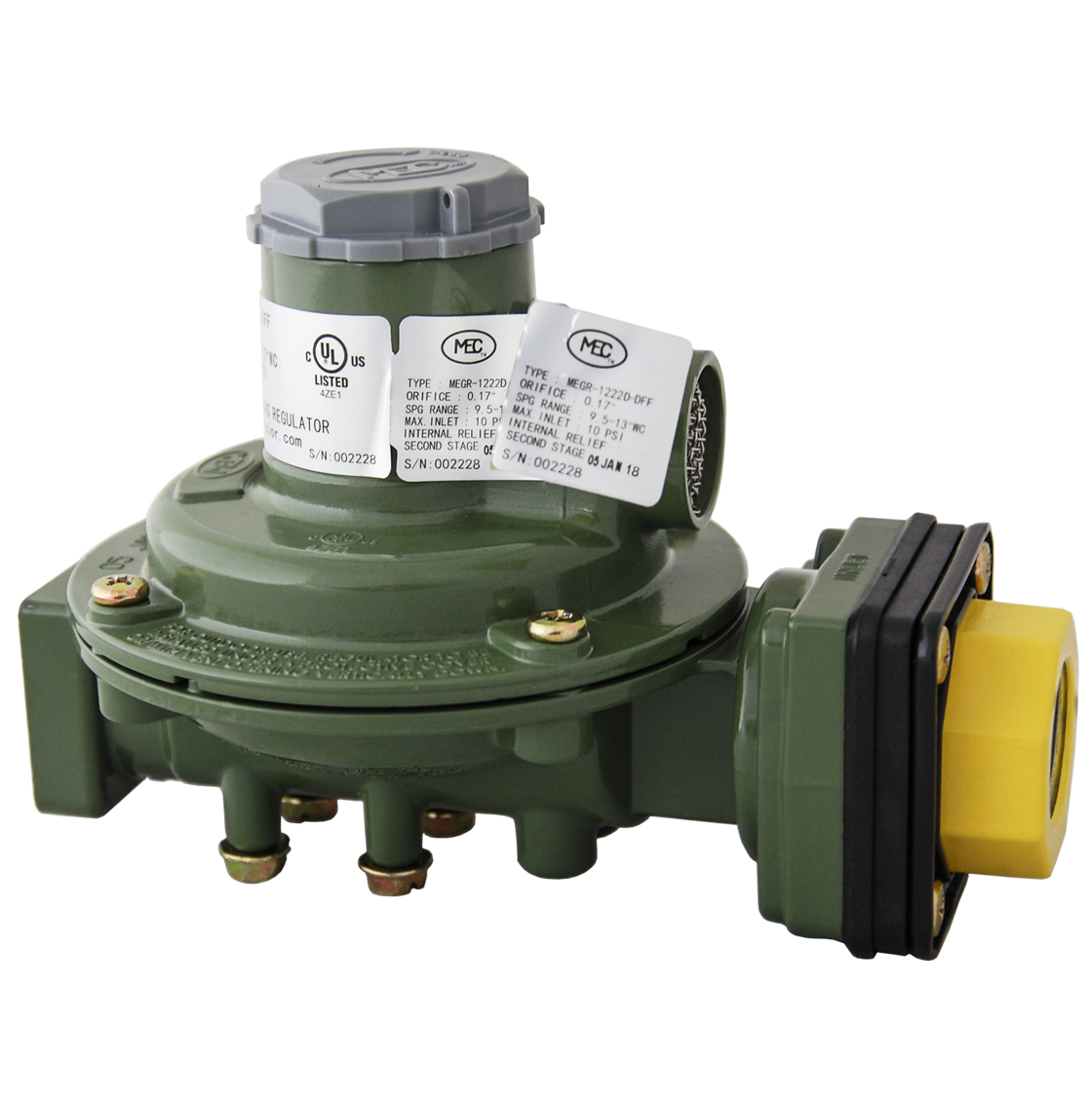
1. Domestic Second Stage Regulators with Dielectric Inlets. Examples are the Marshall Excelsior SENTINEL series. The SENTINEL series second stage dielectric regulators feature an integral dielectric inlet connection to isolate upstream metallic piping from current prior to piping entering the building. The regulators are color coded with a Yellow Inlet fitting to make them easily recognizable. They are available in all configurations including full sized, compact and 2 psi service regulators. Details on Marshall Excelsior Sentinel Regulators – click HERE.
2. Dielectric Ball Valves. Jomar offers a series of union end dielectric ball valves for both copper tubing flare and hard pipe gas service lines. This offer the convenience and safety of the dielectric requirement and an easily accessible gas shutoff valve. The Jomar T203 Series also offers a convenient side tap for quick pressure tests. More Information on Jomar Dielectric Ball Valves – click HERE.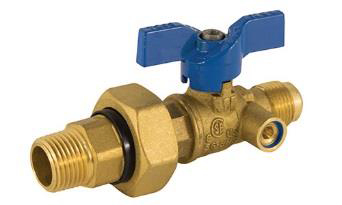
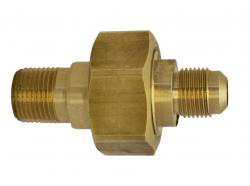
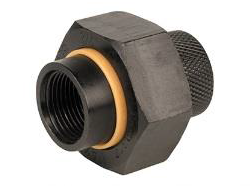
3. Dielectric Unions. The dielectric union was the first product available to meet the Code requirement. Both Jomar and Marshall Excelsior offer dielectric unions in copper tubing flare or pipe thread connections. Upgrading an existing installation may be easier to use just the union as it is compact in size and may be able to be installed without additional re-piping.
More Information on MEC Dielectric Unions – click HERE
More Information on Jomar Dielectric Unions – click HERE
Regardless of choice, there are several very good products available form Gardner Marsh Gas Equipment to meet your needs for a safe and Code compliant installation.