

I have worked with many different personalities over the years and I have concluded there are two very different schools of thought into which most everyone falls. One is that the way we have always done it is the only way it is supposed to be done.
The other embraces, supports, and encourages change and adaptation. I fall more into the latter, but I fully respect and accept that there is usually nothing wrong with the way things have been done in the past. However, I believe that, as an industry, we didn’t keep up with trends and technology for a while. From what I see now though, we are catching up and looking for ways to adapt. Before I get too caught up in other conversations, let me get to the point of this month’s topic!
Water manometers...analog or digital? That is the question.
Let’s start with what a water manometer is. It is an instrument for measuring the pressure of a fluid, consisting of a tube filled with a liquid, the level being determined by the fluid pressure and the height of the liquid being indicated on a scale. There are two types of manometers: analog and digital.
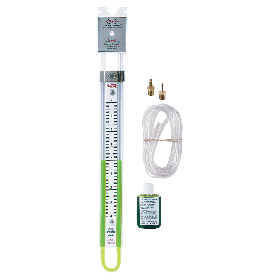
An analog manometer can use a fluid that is in a U-shaped tube to test gas pressure. You can tell if there is no pressure because the fluid settles in the middle of the tube. When the pressure on the inlet side of the tube is higher, it moves the fluid (how many of you have had green dye all over you!). The fluid moves along the scale and a measurement can be made by squinting your eyes real tight to focus right where the fluid is and adding the two numbers together to get your gas pressure in inches of water column. Another type of analog manometer would be a MagneHelic which uses a diaphragm and a series of linkages, a magnet, and a helix on jeweled bearings to measure the pressure.
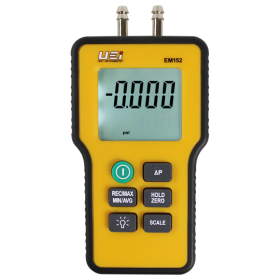
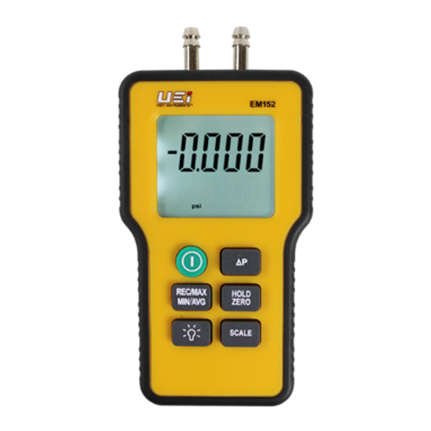
Unlike analog manometers, digital manometers don’t use hydrostatic balance to measure pressure. A digital manometer uses a pressure sensor, or transducer, to measure pressure. The pressure transducer converts the observed pressure into an electrical signal that gives the measurement on an easy to read display. There are advantages to both types of tools. Analog versions have very few, if any, moving parts to break. They are extremely accurate. One of my former employers would only accept the U-tube manometer for documenting testing. A digital manometer is smaller, easier to carry and use, and there is no chemical to spill. It is also much easier to read and can be easily calibrated both features reducing human error. When troubleshooting specific appliances, some companies will only help you if you are using a digital manometer to take manifold readings, so it is best to have one even if it isn’t your go to.
Now, at the end of this newsletter, I’ve realized how hard it is to type MANOMETER over and over again and don’t care to ever do it again...
Product Spotlight
The EM152 measures differential, positive or negative pressure. A simple hose barb connection for quick coupling to either the included tubing or customer supplied tubing. These have many applications: validate pressures in accordance with equipment specs; 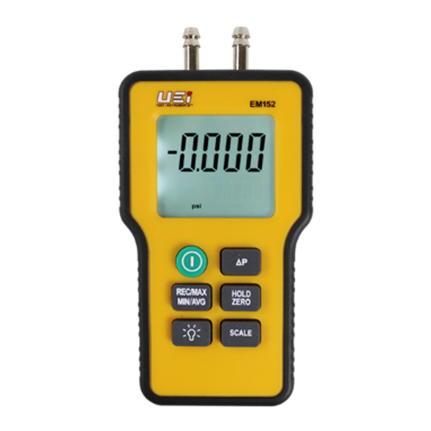 measure gas supply, manifold, or burner pressures; and dual input offers users the ability to measure pressure drops across heat exchangers. Easy operation and the clear display make this an indispensable testing tool for Gas, Plumbing, & HVAC technicians. With protective over molding for real world work environments. It operates off of the included 9V battery and also comes with tubing and a soft carry pouch. The EM152 is backed by a 1-Year limited warranty.
Dwyer® 1223-16-D Flex-Tube® U-Tube Manometer- combines the inherent accuracy of the simple "U" Tube with the durability of tough, long-lasting plastic construction. These inexpensive manometers measure positive, negative and differential pressures. 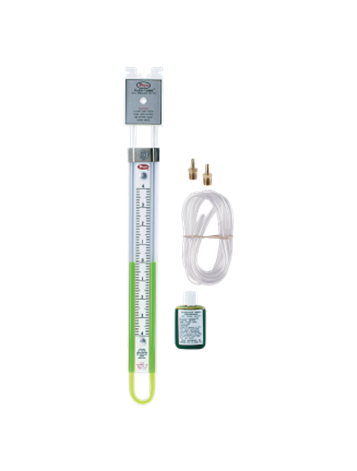 Columns are of .375" O.D. flexible and shatter proof clear butyrate tubing. They are easily accessible for cleaning. Indicating tube is backed by white scale channel to provide maximum color contrast. Scales are extruded high impact polystyrene plastic, formed to hold columns in perfect alignment. Stark white scales have graduations and numbers silkscreen-printed in black for maximum legibility.
EMAIL DARREN: DMCARDLE@GARDNERMARSH.COM