

Did you know that in the 19th century miners used canaries as gas detectors? A scientist by the name of John Haldane completed a series of studies on the cause of miner deaths and found many were because of airborne poisons. He determined the portability and anatomy of canaries made them an ideal early indicator of airborne poisons. Canaries are especially good at detecting toxins in the air because of their specialized respiratory system. When they inhale, they take in a large amount of air relative to it’s size, part of which it stores in air sacs distributed through their body. When they exhale, the air stored in the air sacs enters the lungs where an exchange of oxygen and carbon dioxide occurs. So the bird is continuously breathing oxygen both when they inhale and when they exhale. This is what makes them vulnerable to airborne toxins and a good early indicator. How many of you carry canaries on your service trucks and bobtails? Luckily, we have had an advancement or two over the past century and no longer rely on that little yellow bird to indicate when a gas leak is present. According to Occupational Health & Safety, gas hazards fall into three categories: flammable, toxic, and asphyxiant. Propane is flammable and can also be an asphyxiant, while Carbon Monoxide is toxic.
It is essential to both promote gas detection safety to your customers and to carry the proper tools on your vehicles. I know what some of you old school folks are thinking right now. “My lighter is always in my pocket!” I don’t need to tell you that a lighter is not an acceptable tool. I am talking about your leak detector kits, soap solution, and combustible gas detectors. These types of tools are must-haves on your vehicle. You should also be carrying leave behind detectors as well as many AHJs have carbon monoxide detector requirements in residential dwellings. This is also an easy add-on sale; sell two per week and you’ll add over $5000 in sales by year-end.
Leak checks done with the proper gauges and equipment are great at determining there is a leak, and a non-corrosive soap in conjunction with a gas sniffer are excellent tools to determine where the leak is occurring and can save time on finding and repairing the issue. Another important tool is to have a routine for these calls. Each call should be taken seriously and treated with the same sense of urgency. I know as well as anyone does that a lot of times, the same customer will call what seems like weekly complaining of a gas smell and every time you arrive on site, there is nothing wrong. Sometimes, this causes us to get too comfortable and rush through the process or skip over it entirely and it only takes one time for something bad to happen. It is our jobs to investigate and resolve. How many go above and beyond to talk to this customer and really listen to their concerns? Often times, when the right questions are asked you will find that there is a real reason for the call. It may be that the customer is burning a candle or only smells it right after cleaning, or maybe even there is a dead animal in the crawl space. Spend the time to talk to the customer and actually listen to them and maybe, you’ll find the information that both you and they need to resolve the issue. Maybe it’s a leak, maybe it’s something else, but in spending the time properly investigating with the proper tools, you may just make a customer become loyal.
Product Spotlight
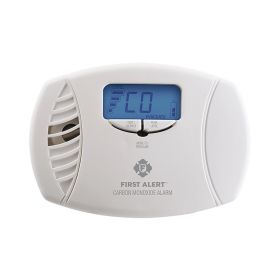
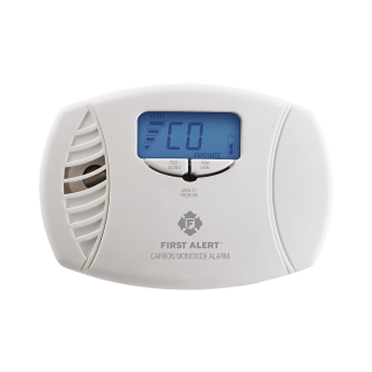
First Alert 1039746 Carbon Monoxide Alarm
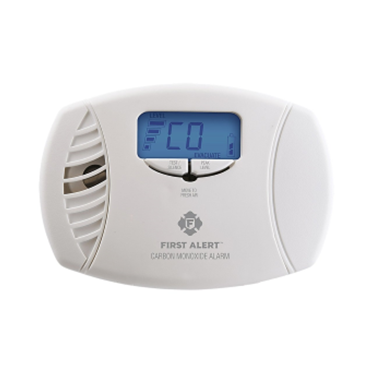
The First Alert CO615 Dual-Power Carbon Monoxide Plug-In Alarm alerts you to dangerous carbon monoxide levels. This plug-in carbon monoxide detector operates on a dual-power system with battery backup for continuous monitoring, even in the event of a power outage. The backlit digital screen tells you at a glance what the carbon monoxide and power levels are. The CO detector also features a convenient test and silence button and an end-of-life warning that lets you know when it is time to replace the detector.
EMAIL DARREN: dmcardle@gardnermarsh.com